
This study explores the event integration patterns within Mandarin's "V + Dào" constructions, specifically focusing on realization events. The analysis reveals that internal event integration within the verb (IEI_V) can conflate two or three conceptual primitives, demonstrating flexibility in encoding event semantics. Similarly, internal event integration within "Dào" (IEI_D) consistently involves two conceptual primitives. At the constructional level, external event integration (EEI_VD) is composed of 11 distinct combinations of IEI_V and IEI_D, formulated as “2+2” or “3+2,” reflecting various ways in which conceptual primitives are integrated. By the method of correlation analysis and the framework of event integration, these constructions align with the verb-resultative structure (VRes), central to the realization event framework. Hierarchical analysis of the variables in both IEI_V and IEI_D indicates the prioritization of factors such as association function (AssoFun), action properties (ActiPro), and syntactic types. Additionally, the "V + Dào" construction (Chin_VD) shows weak correlations with several variables, suggesting its relative independence in the event structure. These findings point to a high degree of grammaticalization of the "V + Dào" construction in realization events, offering valuable insights into the structure of Mandarin's motion-event constructions. The study contributes to a deeper understanding of the syntactic and semantic interaction in Mandarin event structures and provides important implications for further research on similar Chinese resultative constructions.
| Published in | International Journal of Education, Culture and Society (Volume 10, Issue 1) |
| DOI | 10.11648/j.ijecs.20251001.14 |
| Page(s) | 23-40 |
| Creative Commons |
This is an Open Access article, distributed under the terms of the Creative Commons Attribution 4.0 International License (http://creativecommons.org/licenses/by/4.0/), which permits unrestricted use, distribution and reproduction in any medium or format, provided the original work is properly cited. |
| Copyright |
Copyright © The Author(s), 2025. Published by Science Publishing Group |
Realization Event, Internal/ External Event Integration, “V + Dào” Construction, Correlation Analysis, Visualization
Three Levels | Variables | Values | |
|---|---|---|---|
Event Semantics | Figural Entity (FigEnt) | Agentive (Agen) | [True]; [False] |
Animate (Anim) | [True]; [False] | ||
Ground Entity (GroEnt) | property [property] | ||
Activating Process (ActiPro) | [fulfillment]; [confirmation] | ||
Association Function (AssoFun) | transition type [transition] | ||
Support Relation (SuppRel) | [precursion]; [enablement]; [cause]; [manner]; [subsequence]; [constitutedness] | ||
Syntactic Properties | Syntactic Types of “V + Dào” (SynType_VD) | Free Complements (FC); Forward Bound Complements (FBC); Backward Bound Complements (BBC); Bound Complements (BC) | |
Syntactic Types of the Following Component “X” (SynType_X) | temporal nouns (TempN); locative nouns (LocaN); patient nouns (PtienN); stimulus nouns (StimuN); degree nouns (DgreN); temporal clauses (TempC); stimulus clauses (StimuC); degree clauses (DgreC); patient clauses (PtienC); temporal adjectives (TempA); degree adjectives (DgreA); stimulus adjectives (StimuA); non-texts (NoT) | ||
Event Integration Patterns | Internal Event Integration (IEI) | “V” (IEI_V) | [Activating Process] + [Support Relation] |
“Dào” (IEI_D) | [Activating Process] + [Association Function] | ||
External Event Integration (EEI) | The Types of Verb-complement Construction (EEI_Type) | Verb-Directional construction (VDir); Verb-Resultative construction (VRes); Verb-Phase construction (VPha) | |
FigEnt_Anim | |||
|---|---|---|---|
FigEnt_Agen | FALSE | TRUE | Total |
FALSE | 151 | 73 | 224 (20%) |
TRUE | 34 | 848 | 882 (80%) |
Total | 185 (17%) | 921 (83%) | 1106 (100%) |
SynType_X | ||||||||||
|---|---|---|---|---|---|---|---|---|---|---|
SynType_VD | PtienN | StimuN | NoT | DgreN | DgreC | StimuC | DgreA | PtienC | StimuA | Total |
FBC | 430 | 172 | 142 | 13 | 0 | 31 | 4 | 8 | 0 | 800 |
BBC | 0 | 16 | 10 | 85 | 10 | 0 | 3 | 0 | 0 | 124 |
BC | 5 | 6 | 28 | 28 | 27 | 6 | 3 | 0 | 0 | 105 |
FC | 8 | 42 | 1 | 12 | 0 | 0 | 14 | 0 | 0 | 77 |
Total | 443 | 236 | 181 | 138 | 37 | 37 | 24 | 8 | 0 | 1106 |
IEI_V | Frequency | Percentage | Examples |
|---|---|---|---|
fulfillment+cause | 614 | 55.52% | 如果你能办到某些事。 (If you can achieve some things.) |
confirmation+cause | 266 | 24.05% | 我们查不到了。 (We cannot search out.) |
fulfillment+subsequence | 73 | 6.60% | 我们只能告到检察官。 (We can only sue to the prosecutor.) |
confirmation+path+path | 50 | 4.52% | 欢迎继续回来到《国学堂》。 (Welcome back to the Guo Xue Tang) |
confirmation+path | 34 | 3.07% | 欢迎继续来到《国学堂》。 (Welcome to the Guo Xue Tang) |
fulfillment+cause+path | 32 | 2.89% | 画家的画在台湾可以卖到一千万。 (The artist’s paintings can sell for ten million in Taiwan.) |
fulfillment+manner | 24 | 2.17% | 就是训练到看书。 (It is training the (task of) reading the books.) |
confirmation+manner | 7 | 0.63% | 我自己在生活中观察到。 (I have observed that in my own life.) |
confirmation+cause+path | 4 | 0.36% | 演出票可以订到。 (The tickets can be ordered.) |
fulfillment+enablement | 1 | 0.09% | 课程有没有能够帮助到你? (Whether the courses can help you?) |
fulfillment+concomitance | 1 | 0.09% | 我哭到有人注意了。 (I cry to the degree that somebody pays attention to me.) |
Total | 1106 | 100.00% |
Formats | IEI_V | Frequency | Total |
|---|---|---|---|
2 (Two conceptual primitives are conflated in IEI_V) | confirmation+cause | 266 | 1020 (92%) |
confirmation+manner | 7 | ||
confirmation+path | 34 | ||
fulfillment+cause | 614 | ||
fulfillment+concomitance | 1 | ||
fulfillment+enablement | 1 | ||
fulfillment+manner | 24 | ||
fulfillment+subsequence | 73 | ||
3 (Three conceptual primitives are conflated in IEI_V) | confirmation+cause+path | 4 | 86 (8%) |
confirmation+path+path | 50 | ||
fulfillment+cause+path | 32 | ||
Total | 11 | 1106 | 1106 (100%) |
Formats | EEI_VD | Frequency | Total |
|---|---|---|---|
2+2 | (confirmation+cause)+(confirmation+transition) | 266 | 1020 |
(confirmation+manner)+(confirmation+transition) | 7 | ||
(confirmation+path)+(confirmation+transition) | 34 | ||
(fulfillment+cause)+(fulfillment+transition) | 614 | ||
(fulfillment+concomitance)+(fulfillment+transition) | 1 | ||
(fulfillment+enablement)+(fulfillment+transition) | 1 | ||
(fulfillment+manner)+(fulfillment+transition) | 24 | ||
(fulfillment+subsequence)+(fulfillment+transition) | 73 | ||
3+2 | (confirmation+cause+path)+(confirmation+transition) | 4 | 86 |
(confirmation+path+path)+(confirmation+transition) | 50 | ||
(fulfillment+cause+path)+(fulfillment+transition) | 32 | ||
Total | 11 | 1106 | 1106 |
IEI_ReaEvt | VD_Chin | FigEnt_Agen | FigEnt_Anim | ActiPro | AssoFun | SuppRel | SynType_VD | SynType_X | IEI_V | IEI_D | EEI_Type |
|---|---|---|---|---|---|---|---|---|---|---|---|
VD_Chin | 1 | -0.128 | -0.132 | -0.06 | NA | -0.14 | *-0.007 | 0.06 | -0.11 | NA | NA |
FigEnt_Agen | -0.128 | 1 | 0.68 | -0.29 | NA | -0.23 | 0.07 | 0.18 | -0.36 | NA | NA |
FigEnt_Anim | -0.132 | 0.68 | 1 | -0.26 | NA | *0.01 | 0.08 | 0.19 | -0.22 | NA | NA |
ActiPro | -0.06 | -0.29 | -0.26 | 1 | NA | -0.08 | -0.14 | -0.29 | 0.83 | NA | NA |
AssoFun | NA | NA | NA | NA | NA | NA | NA | NA | NA | NA | NA |
SuppRel | -0.14 | -0.23 | *0.01 | -0.08 | NA | 1 | 0.12 | 0.24 | 0.32 | NA | NA |
SynType_VD | *-0.007 | 0.07 | 0.08 | -0.14 | NA | 0.12 | 1 | 0.4 | -0.06 | NA | NA |
SynType_X | 0.06 | 0.18 | 0.19 | -0.29 | NA | 0.24 | 0.4 | 1 | -0.15 | NA | NA |
IEI_V | -0.11 | -0.36 | -0.22 | 0.83 | NA | 0.32 | -0.06 | -0.15 | 1 | NA | NA |
IEI_D | NA | NA | NA | NA | NA | NA | NA | NA | NA | NA | NA |
EEI_Type | NA | NA | NA | NA | NA | NA | NA | NA | NA | NA | NA |
ActiPro | Activating Process |
Agen | Agency |
Anim | Animacy |
Asp | The Marker of the Aspect |
AssoFun | Association Function |
BBC | Backward Bound Complements |
BC | Bound Complements |
Chin_VD | Chinese Instances of “V + Dào” Constructions |
DgreA | Degree Adjectives |
DgreC | Degree Clauses |
DgreN | Degree Nouns |
EEI | External Event Integration |
EEI_Type | External Event Integration in the Verb-complement Types of “V + Dào” Constructions |
EEI_VD | External Event Integration in “V + Dào” Constructions |
FBC | Forward Bound Complements |
FC | Free Complements |
FigEnt | Figural Entity |
FigEnt_Agen | The Agency in the Figural Entity |
FigEnt_Anim | The Animacy in the Figural Entity |
GroEnt | Ground Entity |
IEI | Internal Event Integration |
IEI_D | Internal Event Integration of “Dào” |
IEI_V | Internal Event Integration of “V” |
NA | The Missing Value in R Language |
NoT | Non-Text |
PtienN | Patient Nouns |
PtienC | Patient Clauses |
ReaEvt | Realization Event |
StimuC | Stimulus Clauses |
StimuN | Stimulus Nouns |
SuppRel | Support Relations |
SynType_VD | The Syntactic Types of “V + Dào” Constructions |
SynType_X | The Syntactic Types of “X” Postpositioning “V + Dào” Constructions |
T & F | True and False Value |
TempC | Temporal Clauses |
TempConEvt | Temporal Contouring Events |
TempN | Temporal Nouns |
vd_structure | The Whole Data of “V + Dào” Constructions |
VDir | Verb-directional Constructions |
VPha | Verb-phase Constructions |
VRes | Verb-resultative Constructions |
| [1] | Chao, Y. R. (1968). A Grammar of Spoken Chinese. Los Angeles, CA: University of California Press. |
| [2] | Chen, X. (1996). The existence and disappearance of “Dào” in “Dào + NP”. Journal of Henan University, (2), 59-65. |
| [3] | Croft, W. (2012). Verbs: Aspect and Causal Structure. Oxford: Oxford University Press. |
| [4] | Ding, S. (1999). Modern Chinese Grammar. Beijing: Commercial Press. |
| [5] | Hu, Y. & X., Fan. (1995). Research on Verbs. Kaifeng: Henan University Press. |
| [6] | Huang, B. & X., Liao. (2002). Modern Chinese (3rd revised version II). Beijing: Beijing Higher Education Press. |
| [7] | Jia, H. & F., Li. (2015). The Conceptual Definition of State Change Events and Realization Events. Foreign Language Education, 36(1): 22-27. |
| [8] | Jiang, T. (1982). On the compounds of verbs and prepositions. Journal of Anhui Normal University, (1), 77-88. |
| [9] | Levshina, N. (2015). How to do Linguistics with R: Data Exploration and Statistical Analysis. Amsterdam/Plhiladelphia: John Benjamins Publishing Company. |
| [10] | Li, X. (1982). An analysis of “V + Dào”. Chinese Language Learning, (1), 15-19. |
| [11] | Li, F. (2013). Two systemic errors in macro-event research. Foreign Languages in China, (2): 25-33. |
| [12] | Li, F. T. (2018). Extending the Talmyan typology: A case study of the macro-event as event integration and grammaticalization in Mandarin. Cognitive Linguistics, (3), 1-37. |
| [13] | Liang, Y. (2005). The formation process of “come” and “go” in Chinese verb-phase complement. Linguistic Sciences, (6), 27-35. |
| [14] | Liang, Y. (2007). The Grammaticalization of Chinese Directional Complements. Shanghai: Xuelin Publishing House. |
| [15] | Liu, Y. (1998). A General Explanation of Directional Complements. Beijing: Beijing Language and Culture University Press. |
| [16] | Luo, Y. (1998). The prepositional conflation and the lexicalization of “V + Dào” structure. Studies in Language and Linguistics, (2), 22-27. |
| [17] | Lyu, S. (1980). 800 Words in Modern Chinese. Beijing: Commercial Press. |
| [18] | Shen, J. (2015). Word class typology and Chinese nominalism. Contemporary Linguistics, (22), 17-145. |
| [19] | Talmy, L. (1985). Lexicalization patterns: semantic structure in lexical forms. In T. Shopen (Ed.) Language Typology and Syntactic Description, vol. 3: Grammatical Categories and the Lexicon (pp. 36-149). Cambridge: Cambridge University Press. |
| [20] | Talmy, L. (2000). Toward a Cognitive Semantics: Typology and Process in Concept (Vol. 2). Cambridge: The MIT Press. |
| [21] | Wu, F. (2010). Grammaticalization patterns related to the directional verbs in Chinese dialects. Dialect, (2), 97-113. |
| [22] | Yu, L. & F., Li. (2018). An event integration approach to the variation of “V + Dào” construction in verb complement typology. Foreign Languages and Their Teaching, (1), 72-83. |
| [23] | Yu, L. (2021). An Event Integration Approach to Lexicalizations of Action Correlating Events—A Case Study of “V + Dào” Construction in Mandarin. Open Journal of Modern Linguistics, (3), 335-360. |
| [24] | Yu, L. (2022). A Critical Review of “V + Dào” Construction in Mandarin. Open Journal of Modern Linguistics, (1), 9-22. |
| [25] | Yu, L. & Jiang, X. (2024). A Corpus-Based Study of “V + Dào” Constructions as Realization Events in Mandarin. Communication and Linguistics Studies, 10(2), 19-31. |
| [26] | Zeng, H. (2005). A brief analysis of the syntax of the “V + Dào” structure of modern Chinese. Journal of Jiujiang College, (2), 66-68. |
| [27] | Zhu, D. (1982). Grammar Handouts. Beijing: Commercial Press. |
| [28] | Zhu, D. (1985). Grammar Discussions. Beijing: Commercial Press. |
APA Style
Yu, L. (2025). Unveiling Realization Events: An Event Integration Analysis of “V + Dào” Constructions in Mandarin. International Journal of Education, Culture and Society, 10(1), 23-40. https://doi.org/10.11648/j.ijecs.20251001.14
ACS Style
Yu, L. Unveiling Realization Events: An Event Integration Analysis of “V + Dào” Constructions in Mandarin. Int. J. Educ. Cult. Soc. 2025, 10(1), 23-40. doi: 10.11648/j.ijecs.20251001.14
AMA Style
Yu L. Unveiling Realization Events: An Event Integration Analysis of “V + Dào” Constructions in Mandarin. Int J Educ Cult Soc. 2025;10(1):23-40. doi: 10.11648/j.ijecs.20251001.14
@article{10.11648/j.ijecs.20251001.14,
  author = {Lin Yu},
  title = {Unveiling Realization Events: An Event Integration Analysis of “V + Dào” Constructions in Mandarin
},
  journal = {International Journal of Education, Culture and Society},
  volume = {10},
  number = {1},
  pages = {23-40},
  doi = {10.11648/j.ijecs.20251001.14},
  url = {https://doi.org/10.11648/j.ijecs.20251001.14},
  eprint = {https://article.sciencepublishinggroup.com/pdf/10.11648.j.ijecs.20251001.14},
  abstract = {This study explores the event integration patterns within Mandarin's "V + Dào" constructions, specifically focusing on realization events. The analysis reveals that internal event integration within the verb (IEI_V) can conflate two or three conceptual primitives, demonstrating flexibility in encoding event semantics. Similarly, internal event integration within "Dào" (IEI_D) consistently involves two conceptual primitives. At the constructional level, external event integration (EEI_VD) is composed of 11 distinct combinations of IEI_V and IEI_D, formulated as “2+2” or “3+2,” reflecting various ways in which conceptual primitives are integrated. By the method of correlation analysis and the framework of event integration, these constructions align with the verb-resultative structure (VRes), central to the realization event framework. Hierarchical analysis of the variables in both IEI_V and IEI_D indicates the prioritization of factors such as association function (AssoFun), action properties (ActiPro), and syntactic types. Additionally, the "V + Dào" construction (Chin_VD) shows weak correlations with several variables, suggesting its relative independence in the event structure. These findings point to a high degree of grammaticalization of the "V + Dào" construction in realization events, offering valuable insights into the structure of Mandarin's motion-event constructions. The study contributes to a deeper understanding of the syntactic and semantic interaction in Mandarin event structures and provides important implications for further research on similar Chinese resultative constructions.
},
 year = {2025}
}
TY  - JOUR
T1  - Unveiling Realization Events: An Event Integration Analysis of “V + Dào” Constructions in Mandarin

AU  - Lin Yu
Y1  - 2025/02/10
PY  - 2025
N1  - https://doi.org/10.11648/j.ijecs.20251001.14
DO  - 10.11648/j.ijecs.20251001.14
T2  - International Journal of Education, Culture and Society
JF  - International Journal of Education, Culture and Society
JO  - International Journal of Education, Culture and Society
SP  - 23
EP  - 40
PB  - Science Publishing Group
SN  - 2575-3363
UR  - https://doi.org/10.11648/j.ijecs.20251001.14
AB  - This study explores the event integration patterns within Mandarin's "V + Dào" constructions, specifically focusing on realization events. The analysis reveals that internal event integration within the verb (IEI_V) can conflate two or three conceptual primitives, demonstrating flexibility in encoding event semantics. Similarly, internal event integration within "Dào" (IEI_D) consistently involves two conceptual primitives. At the constructional level, external event integration (EEI_VD) is composed of 11 distinct combinations of IEI_V and IEI_D, formulated as “2+2” or “3+2,” reflecting various ways in which conceptual primitives are integrated. By the method of correlation analysis and the framework of event integration, these constructions align with the verb-resultative structure (VRes), central to the realization event framework. Hierarchical analysis of the variables in both IEI_V and IEI_D indicates the prioritization of factors such as association function (AssoFun), action properties (ActiPro), and syntactic types. Additionally, the "V + Dào" construction (Chin_VD) shows weak correlations with several variables, suggesting its relative independence in the event structure. These findings point to a high degree of grammaticalization of the "V + Dào" construction in realization events, offering valuable insights into the structure of Mandarin's motion-event constructions. The study contributes to a deeper understanding of the syntactic and semantic interaction in Mandarin event structures and provides important implications for further research on similar Chinese resultative constructions.

VL  - 10
IS  - 1
ER  -
School of Foreign Languages, Henan University, Kaifeng, China
Biography: Lin Yu (Corresponding author) is an associate professor in the Research Center of Foreign Linguistics and Applied Linguistics at Henan University, and she also serves as Director of the Editorial Office of Foreign Studies. Her research interests focus on cognitive linguistics, pragmatics, and linguistic typology. She has published in journals such as System, Foreign Language Teaching and Research, Foreign Languages and Their Teaching, Linguistic Research, etc.

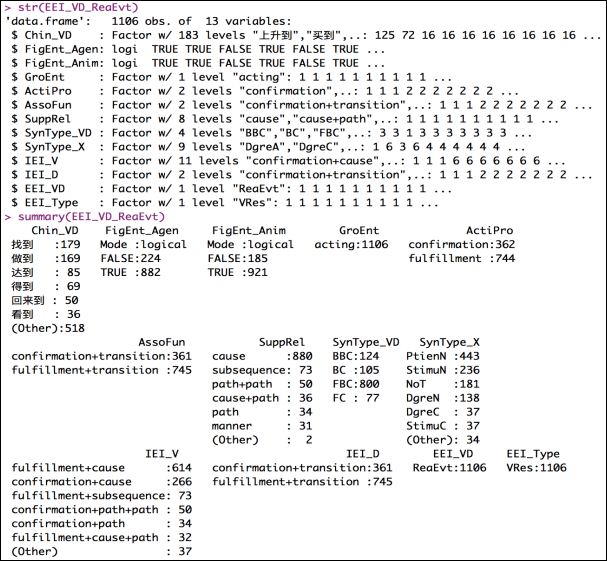
Figure 1. The structure and summary of “V + Dào” constructions in realization events.
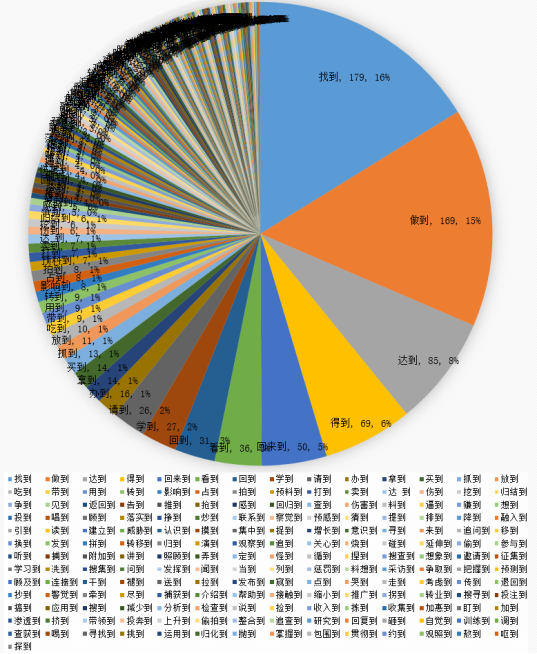
Figure 2. The pie chart of Chin_VD in realization events.
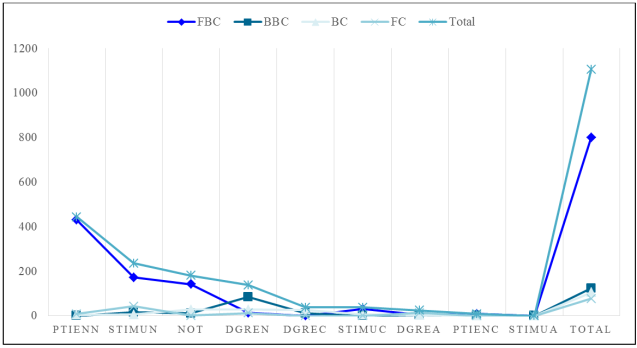
Figure 3. The line chart of syntactic properties in realization events.
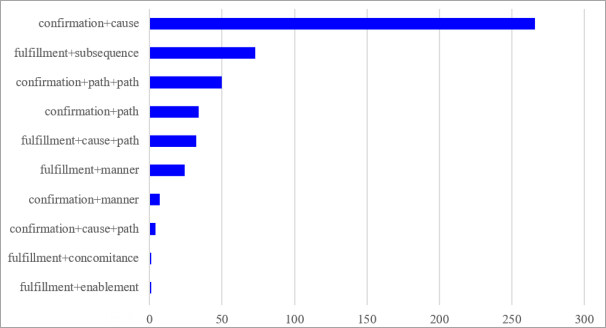
Figure 4. The bar chart of IEI_V in realization events.
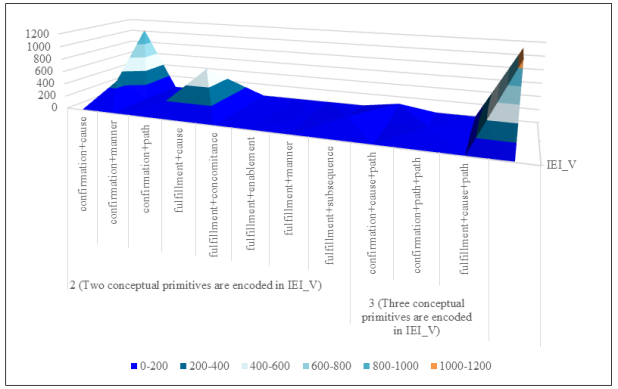
Figure 5. The surface chart of the internal event integration patterns in IEI_V (realization events).
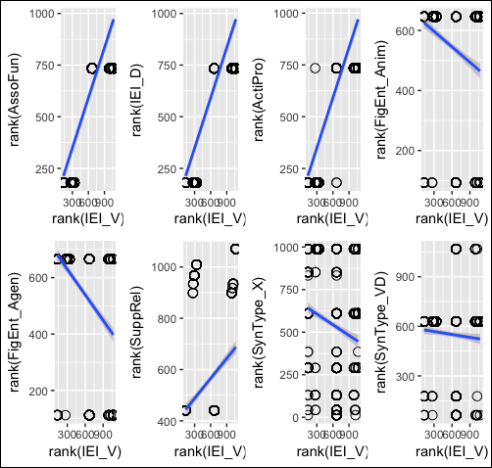
Figure 6. The visualization of the correlations between the variables and IEI_V in realization events.
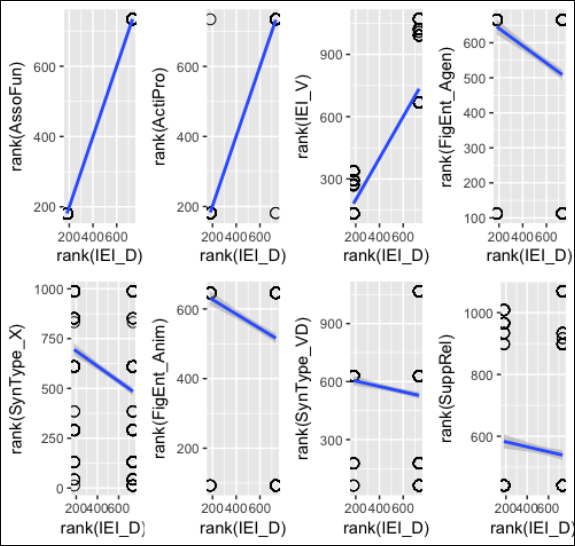
Figure 7. The visualization of the correlations between the variables and IEI_D in realization events.
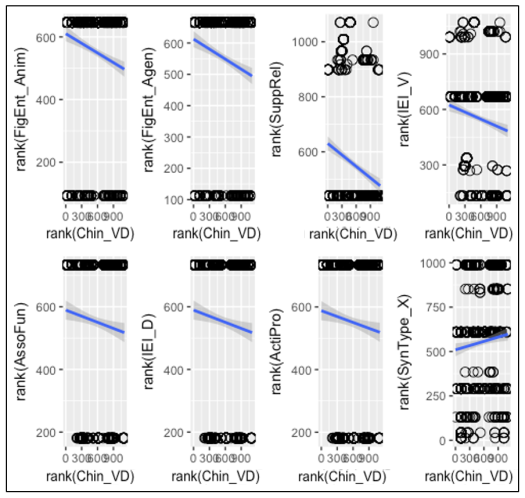
Figure 8. The visualization of the correlations between the variables and Chin_VD in realization events.


 Share This Article
 Twitter
 Linked In
 Facebook
 Copy
Copy Download